

I think this story is a great example of how we took one story and repurposed it across digital channels.
In spring 2023, I wrote an article about the amazing research one of Ohio State’s rehabilitation veterinarians is working on. I traveled to Agility Paws while they were testing the sensors and that helped me better understand Dr. Markley’s research.
Ohio State’s talented partner, Rick Harrison, took the photos and videos.
We shared this story on social media, website and in email newsletters.
The article is up on the VMC website here: https://vet.osu.edu/vmc/agility-dogs-2023 and the CVM website: https://vet.osu.edu/news/dr-markley-teams-develop-wearable-technology-prevent-injuries-agility-dogs
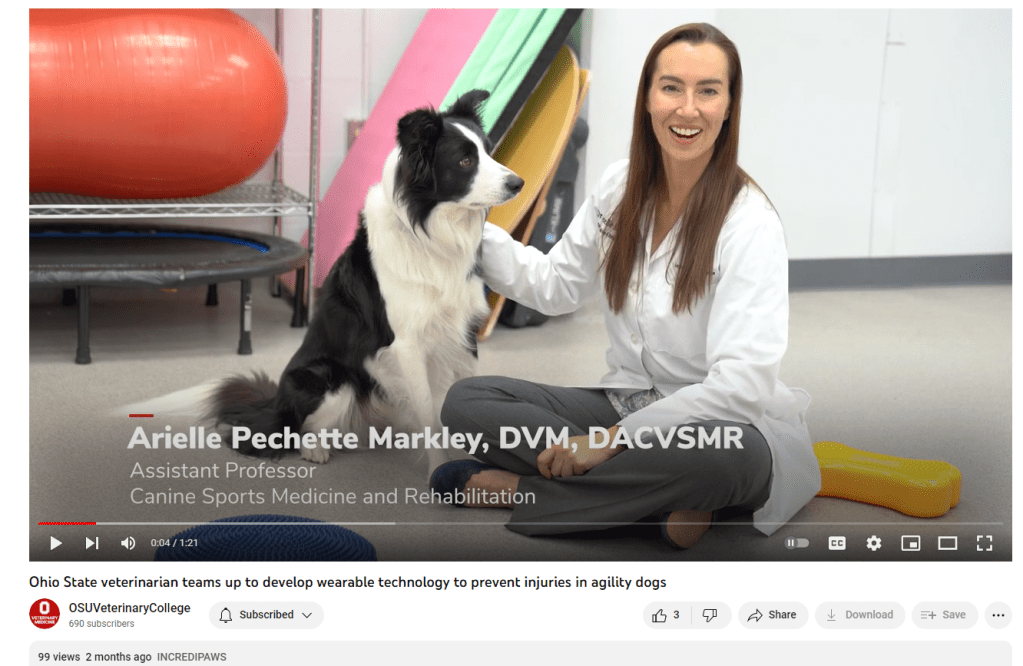
The video is on our YouTube here: https://youtu.be/xtxaf9yk2rA
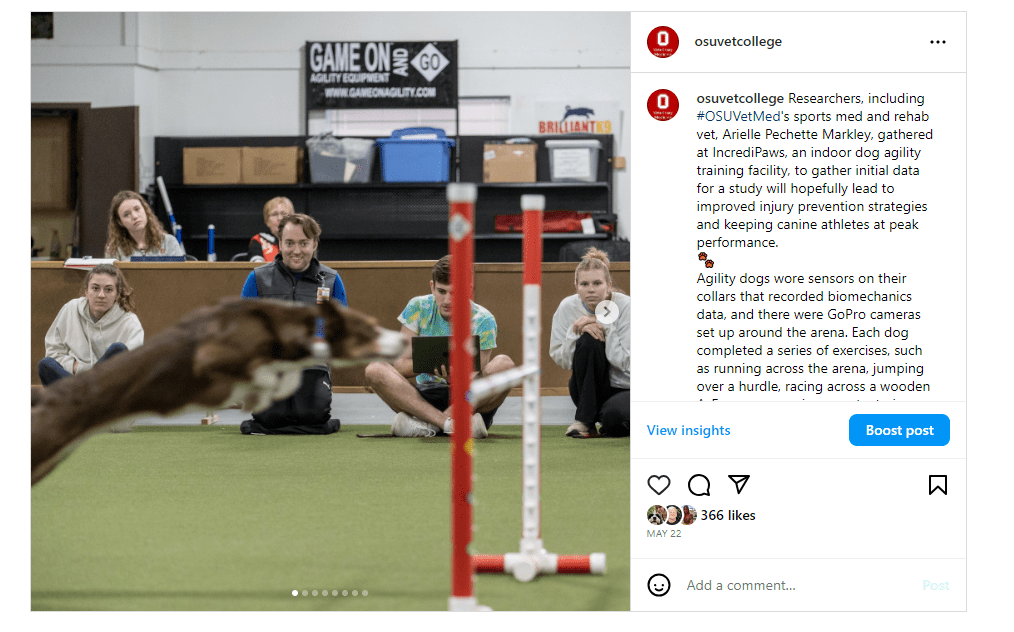
We did an Instagram post : https://www.instagram.com/p/CsjKGj2M1Ld/
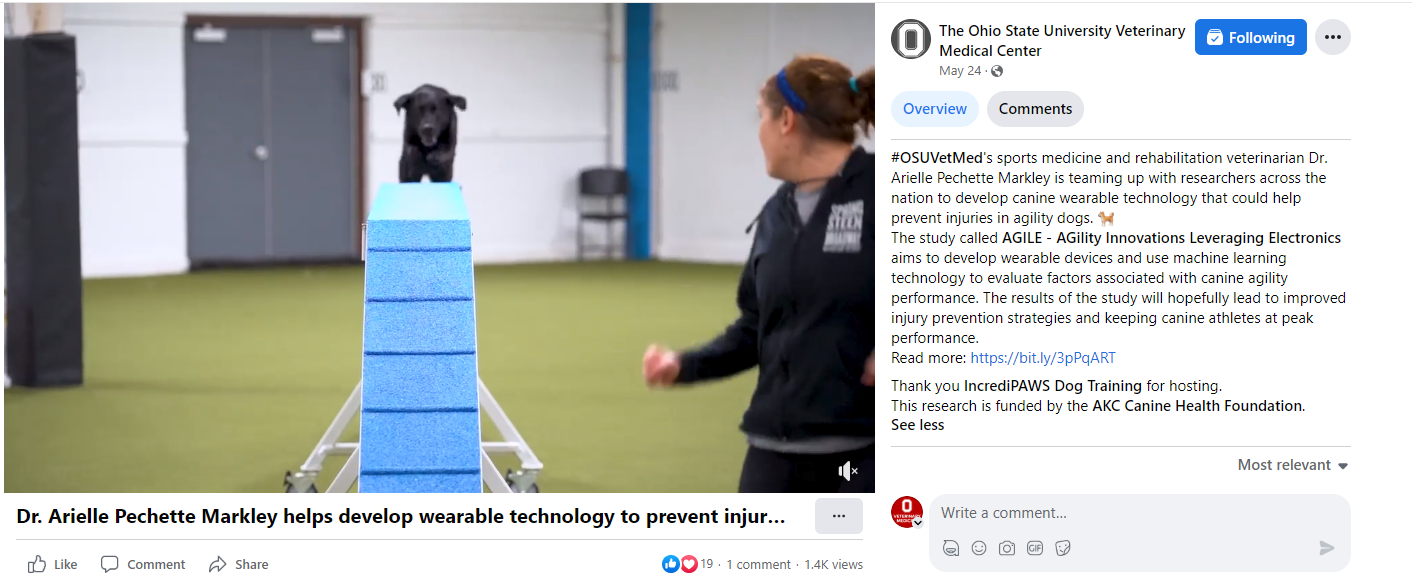
We did a Facebook post: https://www.facebook.com/OSUVeterinaryMedicalCenter/videos/1182296049109887/
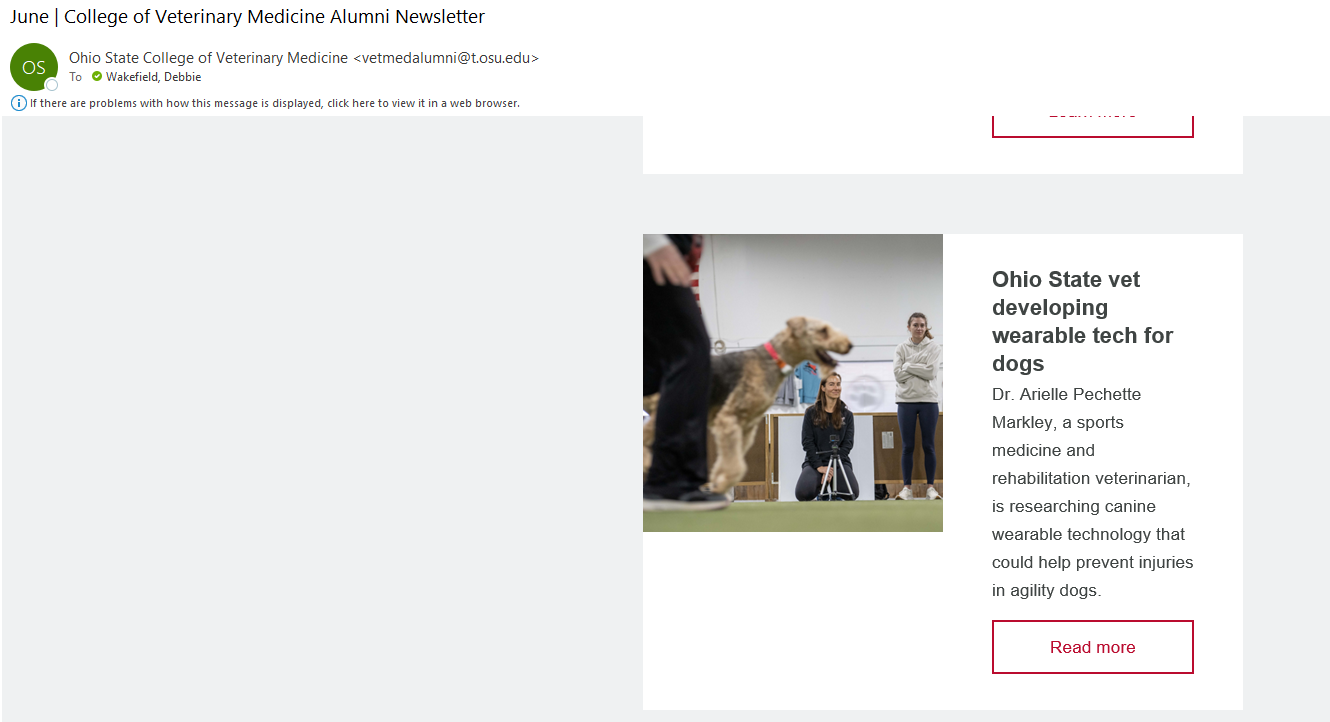
The article was included in our June issue of Connect alumni newsletter:

Article Copy:
Ohio State veterinarian teams up to help develop wearable tech to keep agility dogs healthy
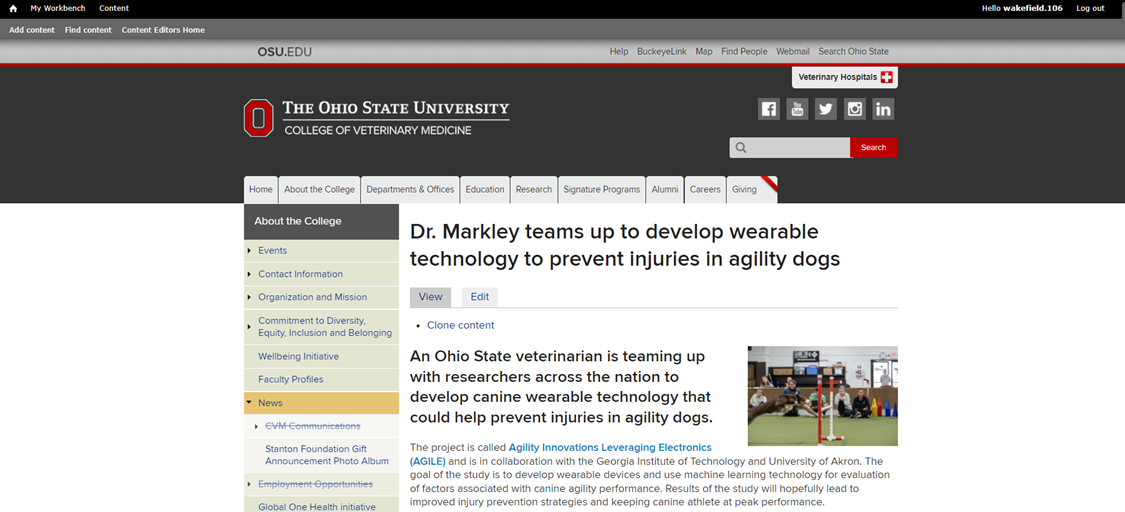
An Ohio State rehabilitation veterinarian is teaming up with researchers across the nation to develop canine wearable technology that could help prevent injuries in agility dogs.
The project called Agility Innovations Leveraging Electronics (AGILE), is in collaboration with the Georgia Institute of Technology and University of Akron. The study aims to develop wearable devices and use machine learning technology to evaluate factors associated with canine agility performance. Results of the study will hopefully lead to improved injury prevention strategies and keeping canine athletes at peak performance.
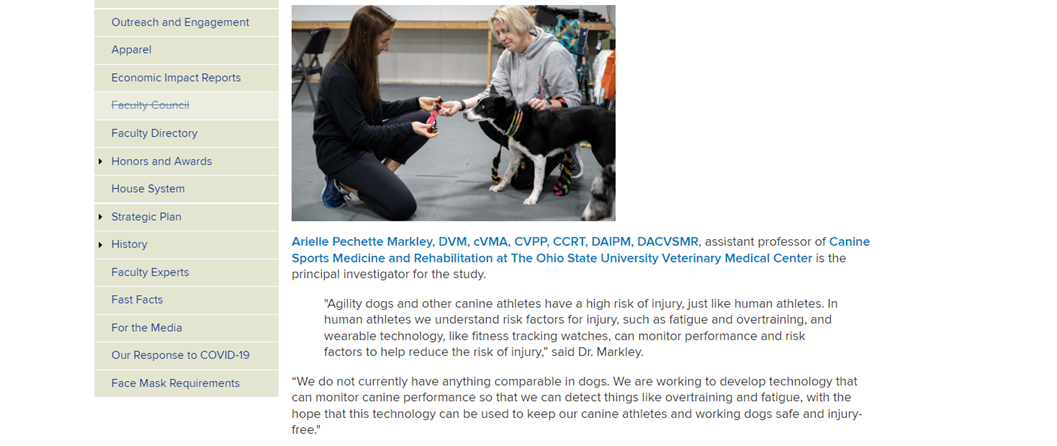
Arielle Pechette Markley, DVM, cVMA, CVPP, CCRT, DAIPM, DACVSMR, assistant professor, in the Canine Sports Medicine and Rehabilitation Center at Ohio State’s Veterinary Medical Center, is the principal investigator for the study.
“Agility dogs and other canine athletes have a high risk of injury, just like human athletes. In human athletes we understand risk factors for injury, such as fatigue and overtraining,” said Markley. “Wearable technology, like fitness tracking watches, can monitor performance and risk factors to help reduce the risk of injury,” Markley said.
“We do not currently have anything comparable in dogs. We are working to develop technology that can monitor canine performance to detect things like overtraining and fatigue, hoping that this technology can be used to keep our canine athletes and working dogs safe and injury-free,” said Markley.
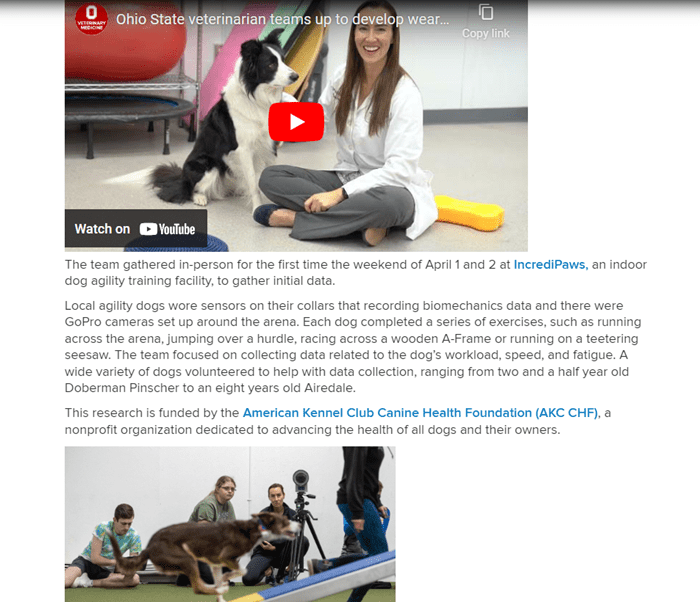
The team gathered in person for the first time the weekend of April 1 and 2 at IncrediPaws, an indoor dog agility training facility, to gather initial data.
Local agility dogs wore sensors on their collars that recorded biomechanics data, and there were GoPro cameras set up around the arena. Each dog completed a series of exercises, such as running across the arena, jumping over a hurdle, racing across a wooden A-Frame, or running on a teetering seesaw.
The team collected data on the dog’s workload, speed, and fatigue. A wide variety of dogs volunteered to help with data collection, ranging from two and a half-year-old Doberman Pinscher to an eight-year-old Airedale.
This research is funded by the American Kennel Club Canine Health Foundation (AKC CHF), a nonprofit organization dedicated to advancing the health of all dogs and their owners.


 Debbie Wakefield